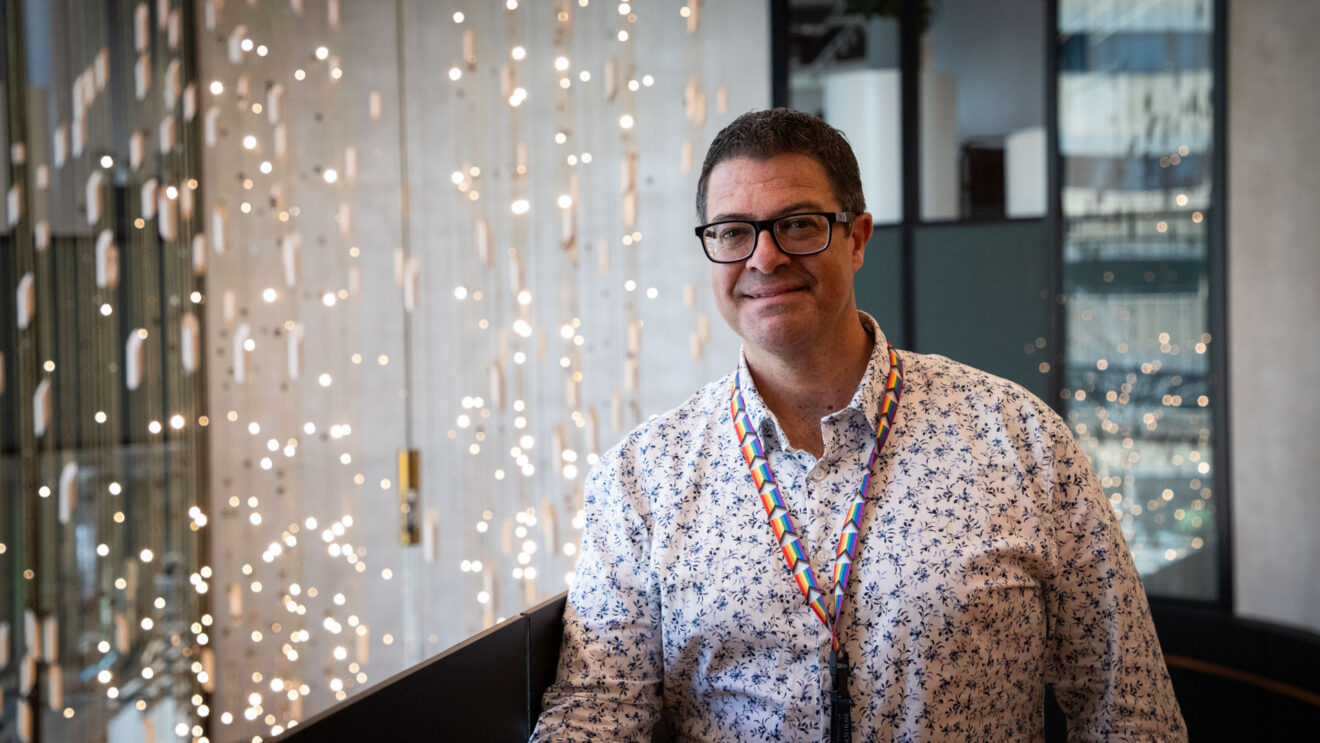
Among the many talented organisations that call Melbourne Connect home, is the much sought after Melbourne Data Analytics Platform (MDAP). This team collaborates with University of Melbourne faculties and external organisations on data-related projects – everything from research tools to physical data-driven installations.
Its platform manager, Dr Andrew Siebel, joined us to reflect on MDAP’s time so far at Melbourne Connect, what’s changed, and what’s in store for the future.
MDAP was established in 2019 as part of a five-year strategic initiative to uplift digital and data led research across the whole University and invest in new infrastructure. And infrastructure, by my definition, is not just the equipment but also the workforce and the human resources that are required to support researchers. That's what our team does. At the time I came on board as platform manager in 2019 there were six research data specialists, all from very different disciplines and backgrounds. That quickly grew to 16 over the first six months. We're now sitting at about 20 staff who help researchers in everything relating to data.
Between 2019 – 2021, we had four different homes across the University of Melbourne’s Parkville campus. It wasn't until we came to Melbourne Connect in March 2022 that we really felt like it was our space. The Pro Vice Chancellor of Research Collaboration at the time, Professor Mark Hargreaves, was looking after all the new tenants and partnerships at Melbourne Connect. He had a view that level eight should be comprised of interdisciplinary research teams and we fitted that bill – our team works across all nine faculties and collaborates on all sorts of data-related projects. The demand for our expertise is ever growing. But I think this size team is exactly what the University needs to ensure that we can be at the cutting edge of new technologies. I love working in this area where things are changing quickly. We’re in the Artificial Intelligence age now and our team are up to speed and continually upskilling in the area in new technologies, in particular AI and generative AI.
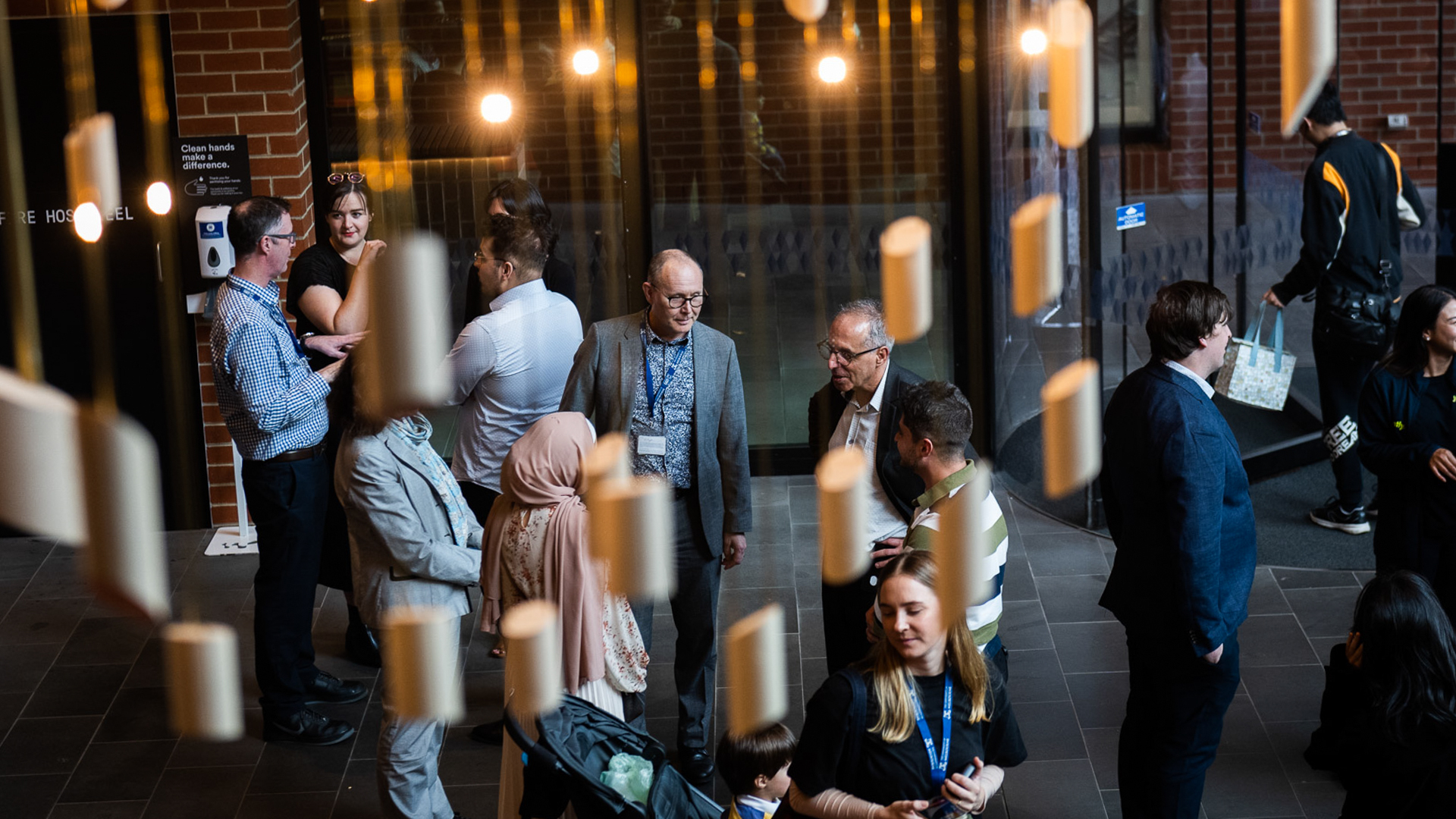
I think it has. There is still more work to be done to work more closely with some of the co-located partners and industry partners. But being co-located with the University of Melbourne’s School of Computing and Information Systems, the Centre for AI and Digital Ethics, and some of the relevant AI-related industry partners has been beneficial. It's facilitated some collaborations, but just being around like-minded people helps everyone learn from each other. The Melbourne Connect team does quite a bit to connect people and the networking events, like Meet the Neighbours, are great for that.
Being here and in this environment where you are co-located with non-university partners and industry partners, makes you think about problems and the real-world application in a different way to what it would be if we were based in the middle of campus, for example.
A great example is the physical installation of The Heart, which is based in the foyer of the building here. It was a collaboration with four different faculties: Arts, Fine Arts and Music, Engineering and IT, and Medicine, Dentistry and Health Sciences. It was a unique challenge. We collaborated with an artist, Dr Robert Walton. It was Robert’s vision and then we were brought in to make it come to life.
It essentially is a depiction of the beating heart of the building, and it connects with 4,800 sensors across the building to collect biometric data. That's real time data collected and automatically processed. And it’s a beautiful installation and visualisation of the data that comes together in this physical structure. It’s a really nice real-world application, something you can see every time you walk into the building and knowing that our team was a key part of that – looking at how that data gets integrated into a physical visualisation of a beating heart – is pretty amazing.
One project that we've recently started is a link with the Australian Research Data Commons (ARDC). It's a project titled enhanced analytics with a focus on researchers in humanities, arts, and social sciences to help develop and design digital tools that can then be applied to a whole range of digital humanities disciplines. It’ll help to improve the findability, accessibility, interoperability and reproducibility of resources in digital data collections in archives, museums and libraries. When working outside of the traditional STEM disciplines, we find there needs to be a different way of working and communicating to make the digital tools relevant to a different audience. It's a national initiative that will go through to mid-2028 and it's already resulted in a number of other potential collaborations. So that’s one that will be in our portfolio over the next few years, in addition to any new projects that come up from across the faculties.
There are always new projects and proposals that are coming to us. Every year we do a call for new collaborations, and we’ll be putting that call out again in August. Soon we'll have another 20-odd projects starting up, with hopefully most of the faculties of the University represented. Most of our work is still with internal partners at the University but we continue to look for opportunities to work with external partners.