Join special guest Prof. Merryn Tawhai, Director, Auckland Bioengineering Institute, University of Auckland to explore how the Auckland Bioengineering Institute is creating biophysical “digital humans” and advancing toward patient-specific digital twins. These models integrate organ-level simulations with whole-body physiology and real-time data from sensors, paving the way for personalised care and predictive health insights. Learn about the infrastructure behind these innovations and see examples of digital organs and whole-body simulations transforming healthcare.
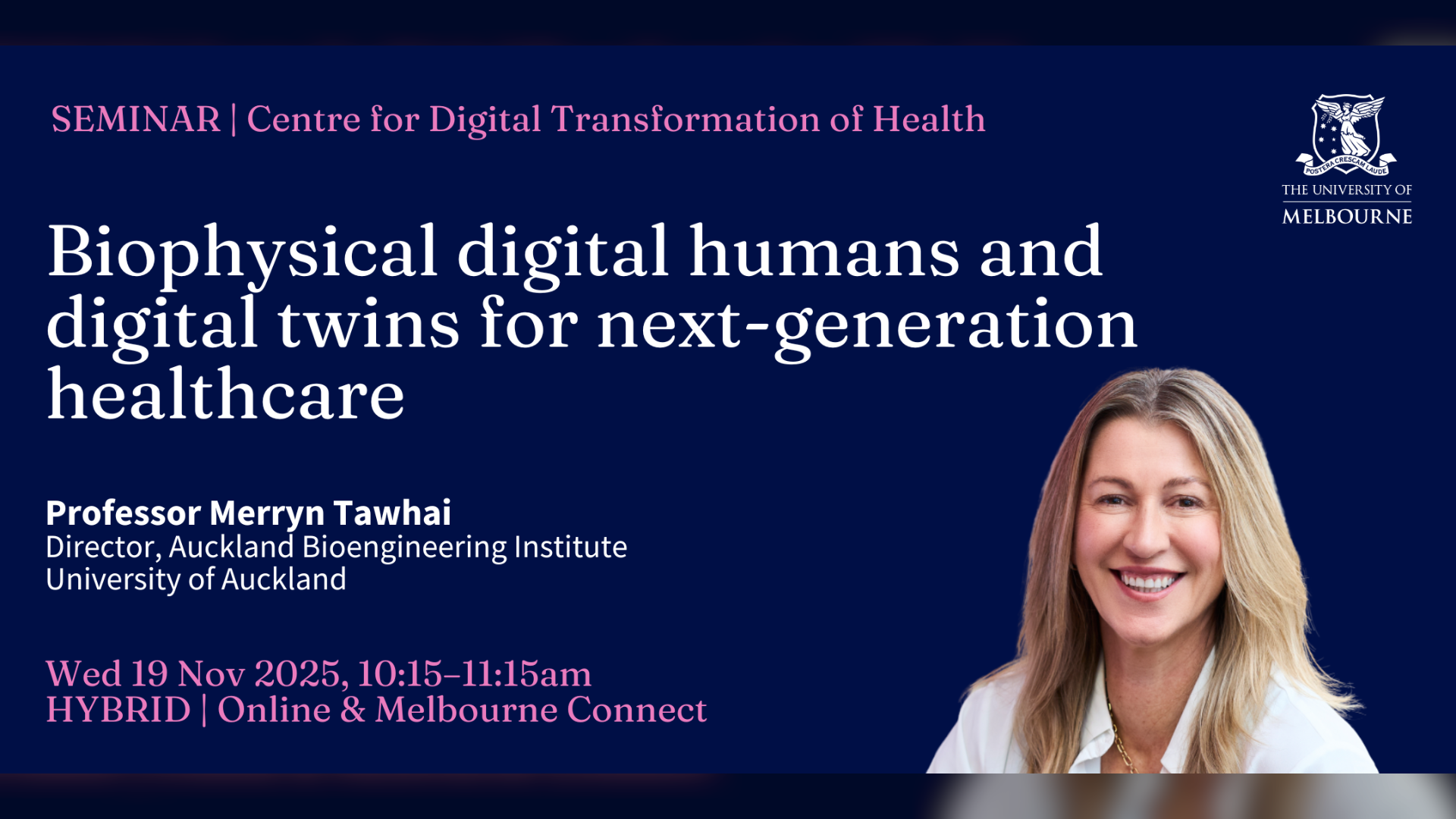
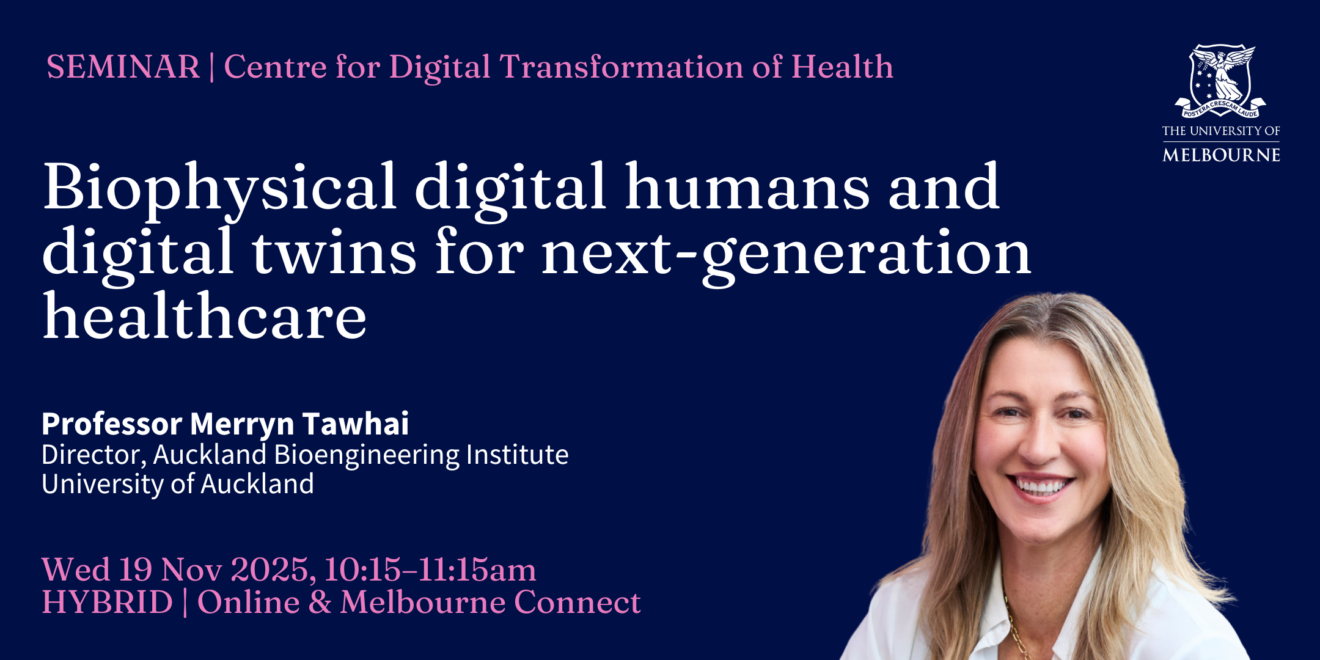
Join special guest Prof. Merryn Tawhai, Director, Auckland Bioengineering Institute, University of Auckland to explore how the Auckland Bioengineering Institute is creating biophysical “digital humans” and advancing toward patient-specific digital twins. These models integrate organ-level simulations with whole-body physiology and real-time data from sensors, paving the way for personalised care and predictive health insights. Learn about the infrastructure behind these innovations and see examples of digital organs and whole-body simulations transforming healthcare.
The Auckland Bioengineering Institute (ABI) has spent more than 25 years developing detailed, multi-scale biophysical models of human organs and creating new bioinstrumentation to measure and image previously inaccessible physiological signals. These efforts have led to a range of medical devices targeting specific organ systems and disease conditions.
Over the past five years, the ABI’s focus has expanded to integrating individual organ models into a unified, whole-body representation. This brings new challenges—combining 3D organ-level models with systems-level physiology, achieving patient-specific parameterisation, and establishing consistent modelling frameworks that allow these components to interoperate seamlessly.
By connecting the resulting biophysical ‘digital human’ with data from wearable and implantable sensors, the ABI is advancing toward a ‘digital human twin’ that continuously updates to reflect a patient’s current physiological state.
This talk will outline the concept of digital twins, the infrastructure needed to support them, and examples of digital organs, digital humans, and digital twins in practice.
This event is available online via this webinar registration, and in-person at Melbourne Connect.
About the Speaker
Professor Merryn Tawhai
Director, Auckland Bioengineering Institute, University of Auckland
Professor Merryn Tawhai is director of the Auckland Bioengineering Institute and leads a research programme in applied computational physiology of the respiratory system. She sits on the board of directors for Cure Kids Ventures and the Virtual Physiological Human Institute and was recently appointed to the Prime Minister’s Science, Innovation and Technology Advisory Council. She is a recipient of the RSNZ Te Apārangi MacDiarmid Medal, a Fellow of the RSNZ, a Fellow of IAMBE and AIMBE and is an elected member of the Fleischner Society.