This article was originally published by the Melbourne Energy Institute
A new Australian Research Council (ARC) Centre of Excellence on Renewable Fuels will bring together fundamental science and industry collaboration to accelerate the development of cost-competitive, scalable renewable fuel technologies.
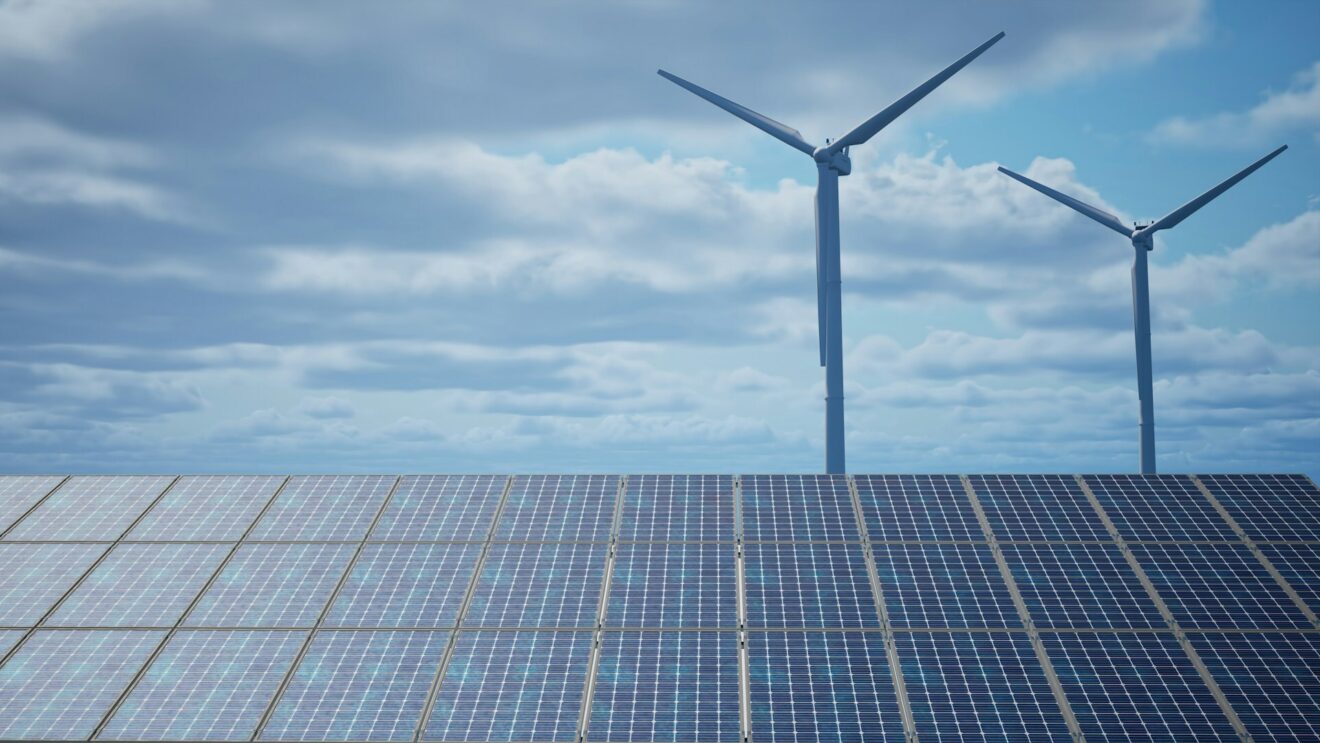
Renewable fuels – including green hydrogen, ammonia, methanol and sustainable aviation fuels – are essential for decarbonising “hard-to-abate” sectors such as heavy industry, shipping, aviation and steelmaking.
But for these fuels to be taken-up as part of the global quest to reach net zero emissions, they need to be cost-competitive, safe, community-sanctioned, and scalable.
Led by a national consortium of seven universities and 16 industry partners, the new ARC Centre of Excellence on Renewable Fuels is expected to deliver the transformational impact needed to enable these fuels to rapidly scale.
It aims to address the fundamental scientific, engineering and engagement challenges currently preventing widespread take-up – with the University of Melbourne taking a lead role.
The centre will focus on achieving real reductions in the cost of renewable fuels by delivering cumulative efficiency gains across the entire value chain – addressing challenges at every stage, simultaneously, and removing the barriers currently limiting large-scale deployment.
A defining feature of the Centre is its highly interdisciplinary research program, bringing together expertise across engineering, materials science, fluid mechanics, systems modelling, safety and social dimensions.
Professor Michael Brear, the University of Melbourne lead for the new centre and head of one of its three research themes, said the centre's systems-level focus was critical to achieving impact at scale.
– Professor Michael Brear, University of Melbourne lead for the ARC Centre of Excellence on Renewable Fuels
"That means making sustained efficiency improvements to meaningfully reduce cost – across production, processing, storage and transport," said Prof. Brear.
"It means designing technologies with scale-up, safety and techno-economic viability embedded from the outset. And it means working closely with industry to ensure ready pathways to commercialisation," he said.
Strong partnerships with industry are central to the centre’s model, helping ensure research outcomes are scalable, bankable and aligned with end-user needs. The centre has been deliberately designed with industry partners embedded as an integral translation pathway, rather than only as end-of-project adopters. Their role is to guide research design, reduce scale-up risk and accelerate commercial uptake, by ensuring the right things are thought about early on.
By working with a diversity of industry partners from the outset, we can accelerate the pathway from research to adoption.
– Professor Yi Yang, University of Melbourne
The centre’s industry partners span renewable fuel production, processing, infrastructure, equipment manufacturing, energy export and investment. Collectively, they can input on real-world constraints, deployment pathways and commercial credibility across the full technology innovation chain.
For Australia, renewable fuels represent not only a climate win, but a major economic opportunity: they will enable our country to transition from an exporter of declining fossil-fuels into a major exporter of in-demand renewable energy and green commodities.
This work will position Australia as a global leader in the production, processing and export of renewable fuels, supporting national decarbonisation, energy security and long-term economic competitiveness.
– Professor Richard Sandberg, Interim Director, Melbourne Energy Institute, University of Melbourne
In addition to Professors Brear, Yang and Sandberg, the Centre will draw on expertise from University of Melbourne researchers, including Professor Mohsen Talei, Dr Melissa Kozul and Dr Dominic Davis, contributing to its interdisciplinary agenda.
They form some of the new generation of transdisciplinary researchers and engineers that the centre will equip to work across science, engineering, economics and communities. As a result, the centre will also contribute to Australia's future workforce and skill needs, building sovereign capability in renewable fuels, supporting domestic fuel security, and creating pathways for new industries, exports and jobs.
One day we will be flying, shipping, manufacturing and steal-making without the harmful carbon emissions we produce today. That day is likely to be sooner, and more likely to be an economic windfall for Australia, should the intentional and integrated work of the new ARC Centre of Excellence on Renewable Fuels succeed.
For more information, contact the University of Melbourne's: Prof. Michael Brear, Prof. Yi Yang or Prof. Richard Sandberg.
Michael Brear is a mechanical engineer and Professor at the University of Melbourne. A former director of the Melbourne Energy Institute, he will lead the University's work with the ARC Centre of Excellence on Renewable Fuels, with a focus on techno-economic modelling, renewable electricity and control systems, safety, and community engagement.
Yi Yang is a Professor in the Department of Mechanical Engineering at the University of Melbourne. His research aims to develop next-generation engines with low GHG and pollutant emissions.
Richard Sandberg is the Chair Professor of Computational Mechanics in the Department of Mechanical Engineering at the University of Melbourne and also serves as the interim director of the Melbourne Energy Institute. He will co-lead the sub-themes Accurate Green Fuel Property Data and Models and Efficient Processing of Renewable Fuels within the centre.