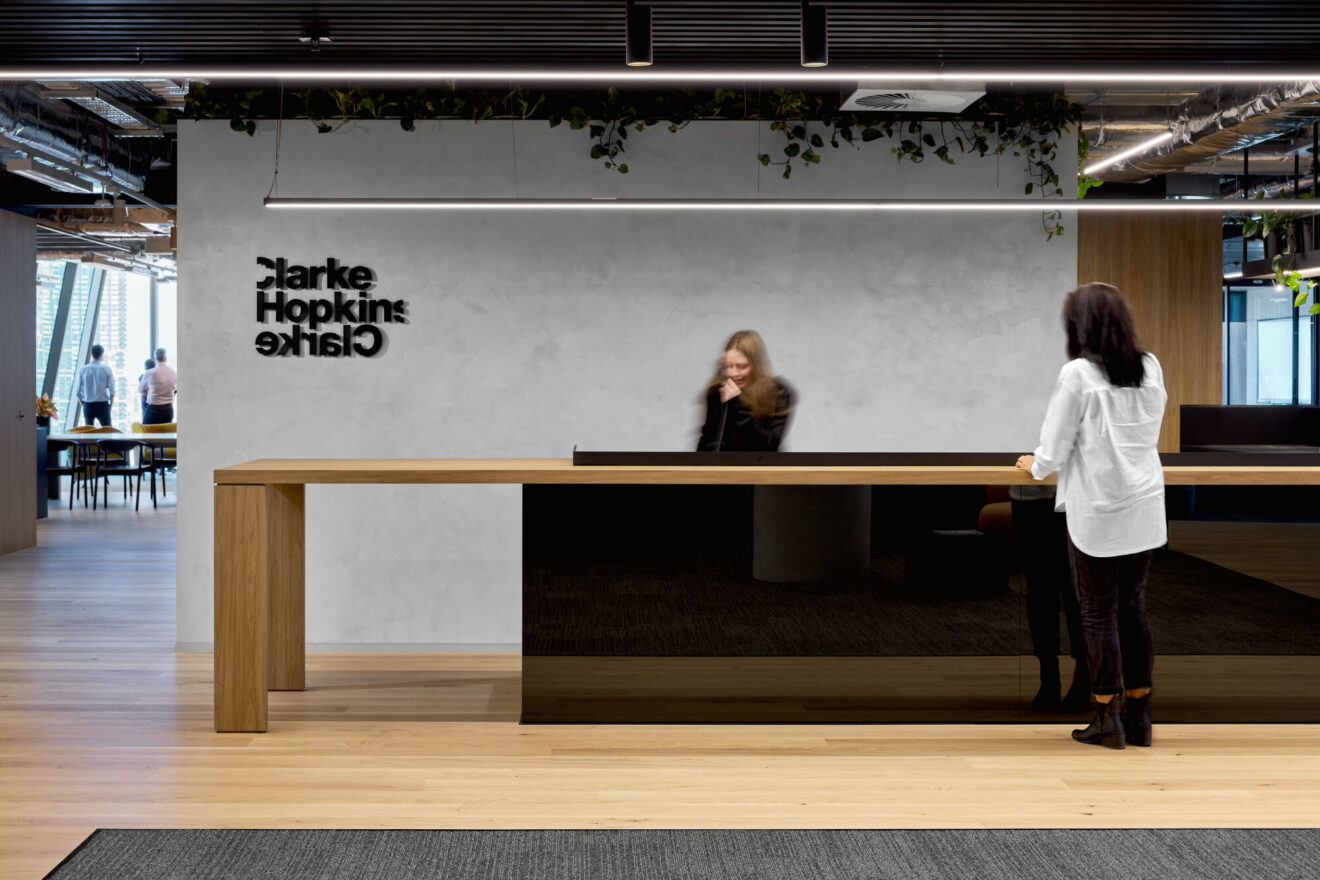
ClarkeHopkinsClarke (CHC) is a national architecture firm which joined Melbourne Connect as its very first co-located partner when the precinct opened five years ago.
We caught up with CHC co-managing partner James Kelly and partner Stephanie Wan to understand how the last five years at Melbourne Connect have transformed the company and how the innovation ecosystem is shaping its future plans.
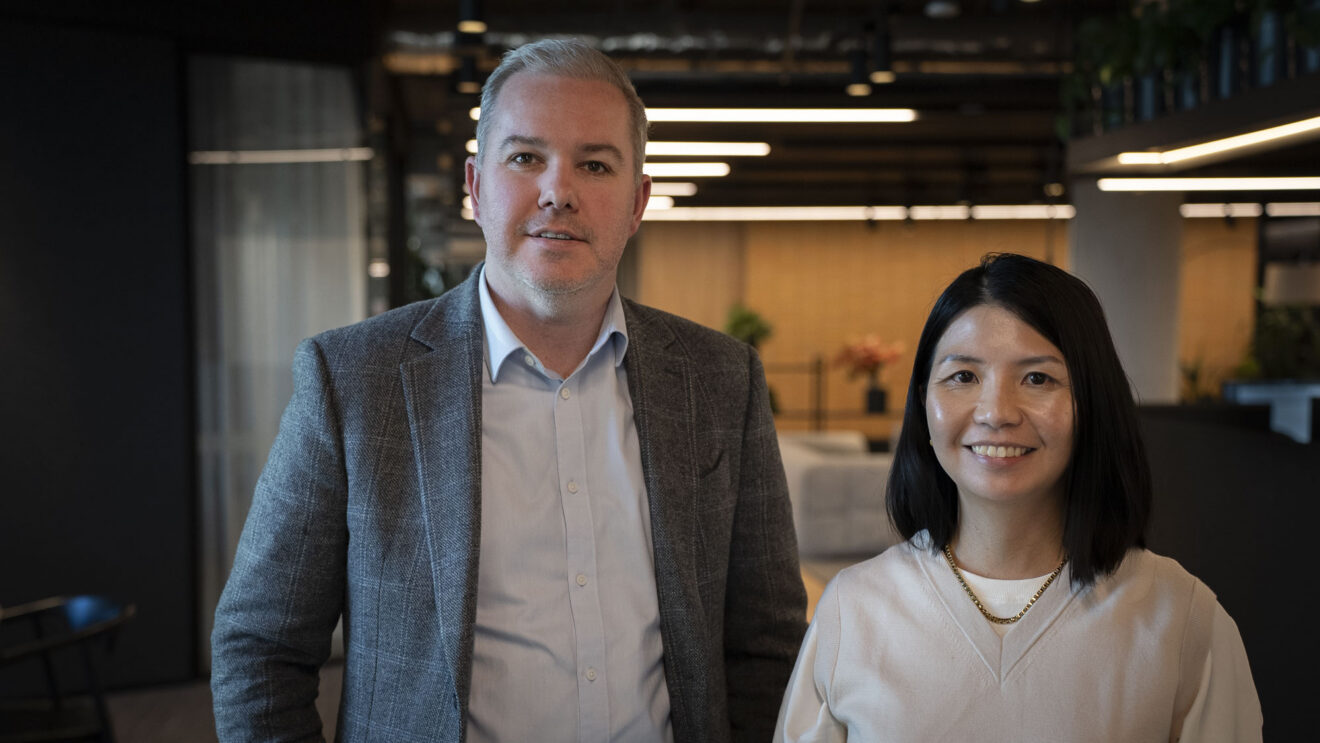
JK: Five years ago, we were in an office in Collingwood. We’d outgrown that space and were looking to take the next step with the practice not only in the kind of work we were doing, but also the partnerships and connections that we could have within the organisation. We were actually moving to another spot, but that fell over during COVID and The University of Melbourne reached out to us and asked if we would be interested in taking a space on the top floor of Melbourne Connect. It was a very easy yes from our perspective in terms of the connection, the location – being a bit more central made it easy for people coming from the east and west. We’d always had a long partnership with the University, and it was a good opportunity to foster that and really amplify it. We were the first to move into Melbourne Connect.
SW: I think it positions CHC as being an innovator and being with like-minded people. Everyone here is pushing the boundaries in their industry. We’ve formed some great relationships so far and been part of a lot of events, panel discussions and conferences – opportunities like this are important to us. And for architects, it’s such an inspiring space to be in. We take pride in taking people through the office. Everyone is impressed by the views and the quality.
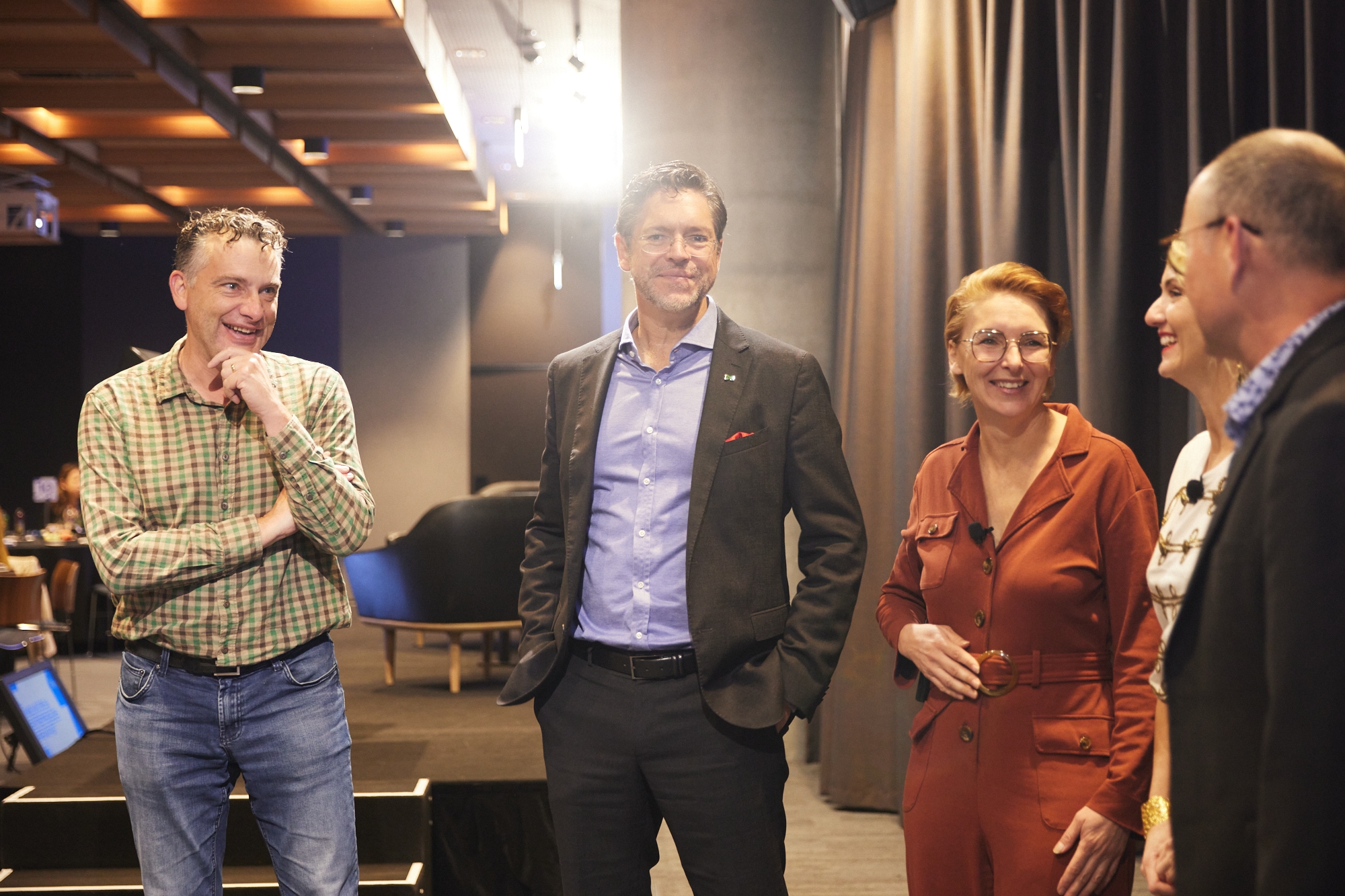
JK: We were really intrigued by the premise of a precinct where multiple different areas and businesses and the University can come together and just see what’s possible – even not knowing really what it was going to mean on day one. We came in as a bit of an outlier, wondering what innovation we were going to bring to Melbourne Connect. But what we’ve seen through these five years is opportunities to talk about the work we do and what we believe in, and then see that stitched into the broader innovation conversation of the precinct. The Future of Longevity event had lawyers and people presenting health and data science, and then me bringing a design perspective. So, it shifts your thinking around what innovation can be. When you look at it in isolation from what you do, you often feel like it’s maybe not that innovative. But when you put it in the context of what everyone is doing, you can see that global advancement and innovation.
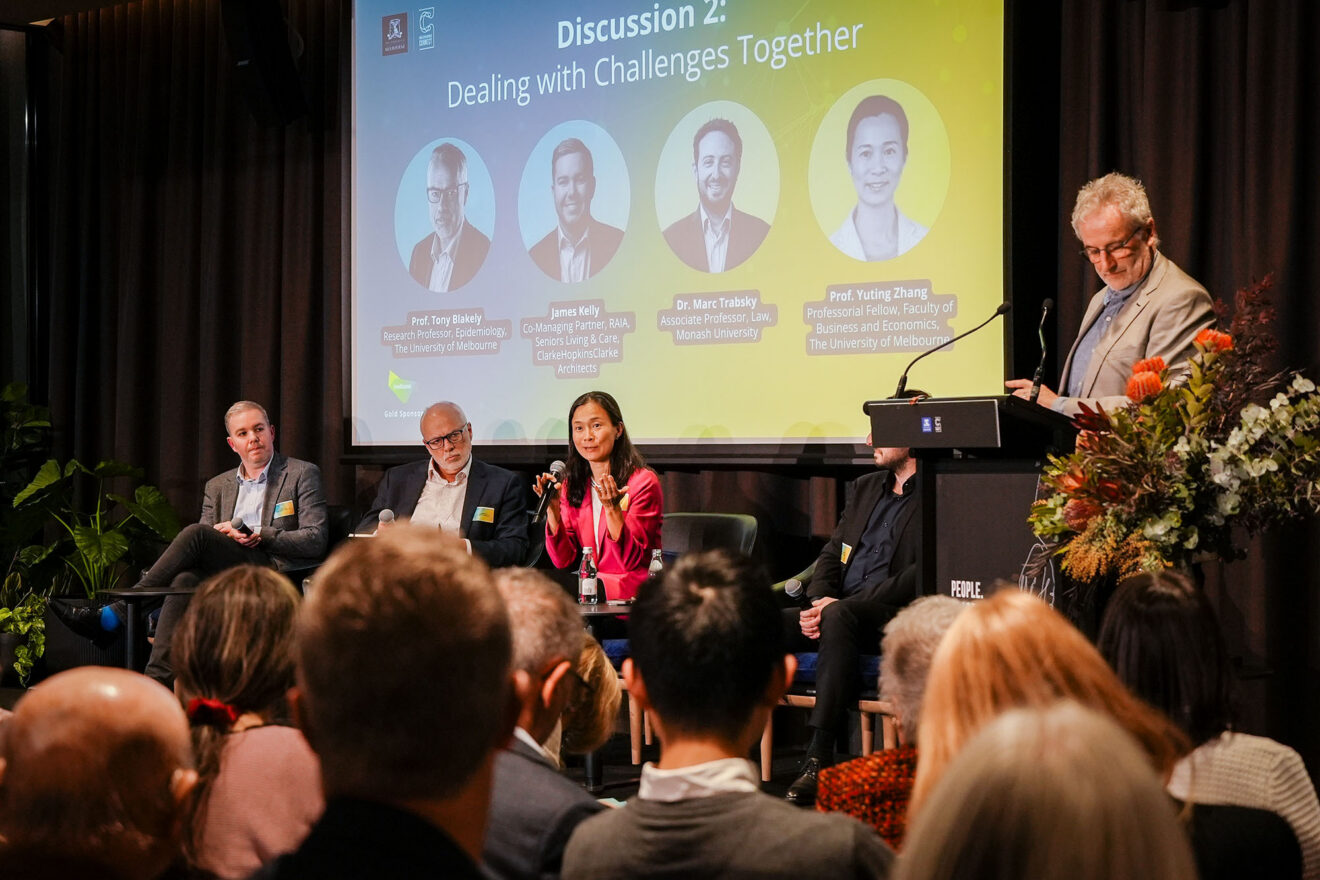
JK: It’s really fostered a much more communal style of work than we had previously – that sense of collaboration, of community, even within our floor. And it has positioned us as a more substantial architectural firm in the industry and strengthened what we bring to the conversation around architecture. We previously liked to think of ourselves as a medium-sized architectural practice that was hunkered away doing good things but, was sort of hidden and, being at Melbourne Connect has put us much more on show. It’s also meant that we could get involved in more substantial discussions around the future of architecture and design and the future of studying architecture and design. We already had a Sydney office, but it’s grown substantially since we’ve been here. We also opened a Brisbane office and we’re now a national practice.
SW: It has opened up opportunities – working with Science Gallery Melbourne and the STEM Centre of Excellence has led to a few collaborations that we didn’t anticipate. I did a teaching stint, for example, whereby students came to our studio instead of being taught at The University of Melbourne. I led a master’s design studio in collaboration with the School of Design and now one of the students works with us.
JK: I think the nature of Melbourne Connect’s team and their ability to find and connect people throughout what is a very large organisation, in The University of Melbourne, has surprised me. They’ve been able to listen to small conversations that have happened and then stitch together a broader conversation that has made something more meaningful. The network that it has created, not only in this building but through the wider University precinct, is much more tangible than I ever thought it was going to be.
SW: I really appreciate that a lot of the partners here want to make genuine connections and want to invest in the relationship with us and see us as a really great partner. For example, the Science Gallery wants to continue collaborating with us and will find ways to do so. That’s really awesome. It’s just opening up different opportunities that we wouldn’t have been able to foresee. These kinds of collaborations have come as great little surprises along the way.
SW: Looking ahead, we're excited to continue building on the relationships we've formed through Melbourne Connect and exploring new opportunities to collaborate. An example of how these connections have already led to meaningful outcomes is our work with the University of Melbourne to support First Nations students into architecture and design pathways. We initially approached The University of Melbourne to see whether there were ways to strengthen the partnership through a scholarship for First Nations students. They told us that they had a scholarship that was open but not filled because there was not enough demand from First Nations students. And we thought, what else can we do to support First Nations students into tertiary pathways? The School of Design came up with the idea to showcase a First Nations designer who had never been featured in an exhibition – Alison Page – to inspire First Nations students and help them see that a career in a design field could be for them. It that was a great success.
JK: What became obvious is that you can’t be what you can’t see. So, giving people the opportunity to see both Alison but also James – our First Nations design lead – and to be able to ask questions and connect with them has been really important. We’ve had students come up to our studio to see what it means to be in an architecture office. The idea is that if you showcase it more, potentially there’ll be opportunities for more people to come into the workforce in the future. If we can do that, we will build greater competency in architecture and in designing with Country, and respect for Country. So, there’s an amazing opportunity there. This is a longer play – it’s a 10-year thing and we’ll see how it pans out. Hopefully someone can remember going to an exhibition or coming to our office in five or six years’ time and then choose architecture as a profession. We are all about building and sharing knowledge. I think that’s something that we’ve definitely gotten better at since we’ve been at Melbourne Connect.