
Imagine biting into a crisp, garden-fresh salad and savouring juicy strawberries for dessert. But instead of your backyard, you’re gazing out at a stark lunar landscape, Earth hanging like a precious blue marble in the inky sky.
Sound like far-fetched sci-fi? Think again.
This cosmic cuisine scenario is fast becoming our reality, thanks to groundbreaking research led by University of Melbourne scientists belonging to the Australian Research Council Centre of Excellence in Plants for Space (P4S, 2024-2030), in partnership with NASA and other space scientists.
A global dream team of over 40 scientists in 11 countries and seven space agencies have united to produce a roadmap for plant science breakthroughs crucial for long-term human life on the Moon and Mars.
And I am lucky enough to be one of them, representing the University’s Digital Agriculture, Food and Wine (DAFW) research group.
Our research, published in New Phytologist, aligns with NASA’s ambitious Artemis moon-exploration program and the P4S.
For me, it’s not just about growing plants in space – it’s about cultivating humanity’s future beyond Earth.
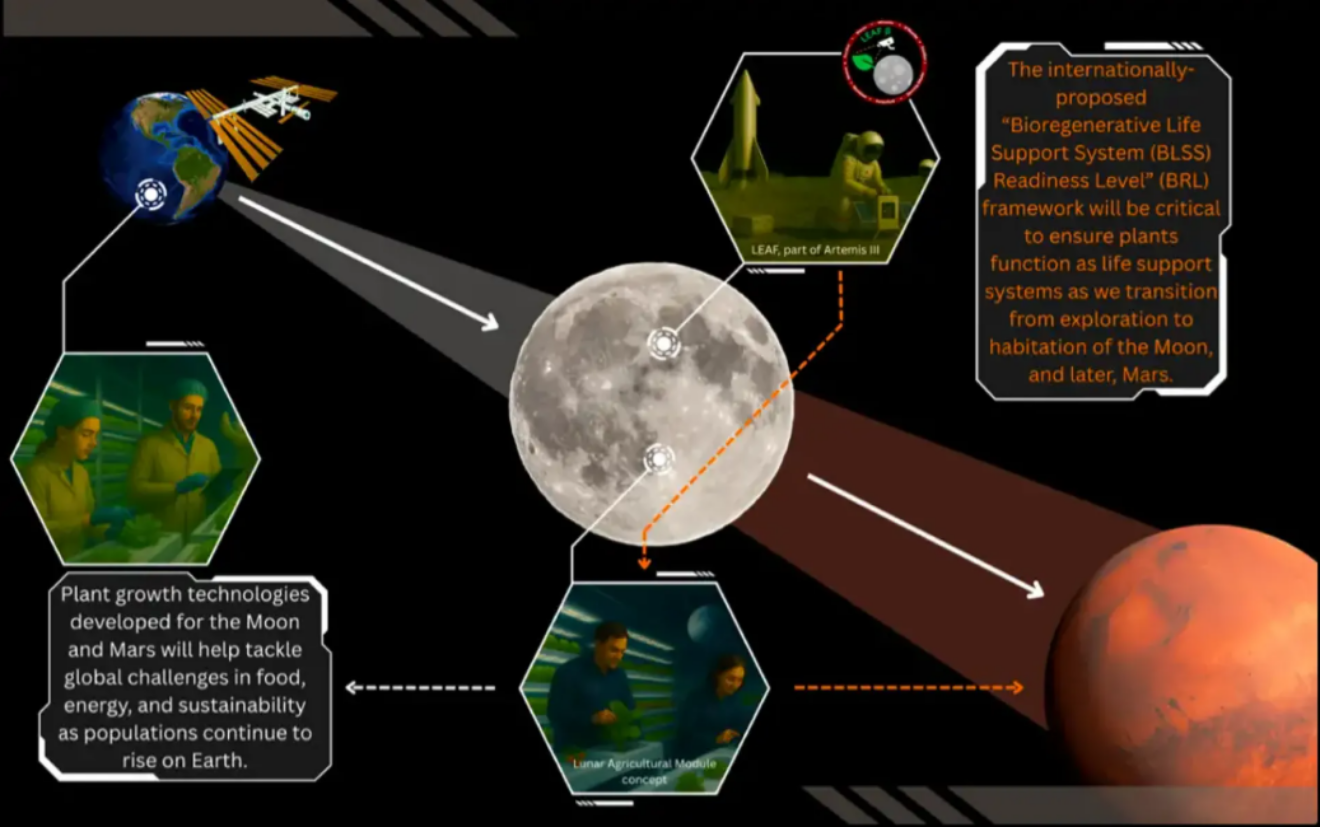
Our work proposes a ‘Bioregenerative Life Support System (BLSS) Readiness Level’ framework, extending NASA’s crop evaluation scale to assess how effectively plants can recycle air, water and nutrients in space habitats.
This ensures that they not only provide nutrition but also other critical life-support functions to sustain human deep-space exploration.
So, why are plants so crucial for space exploration? They’re not just a food source; they’re our lifeline in the cosmos.
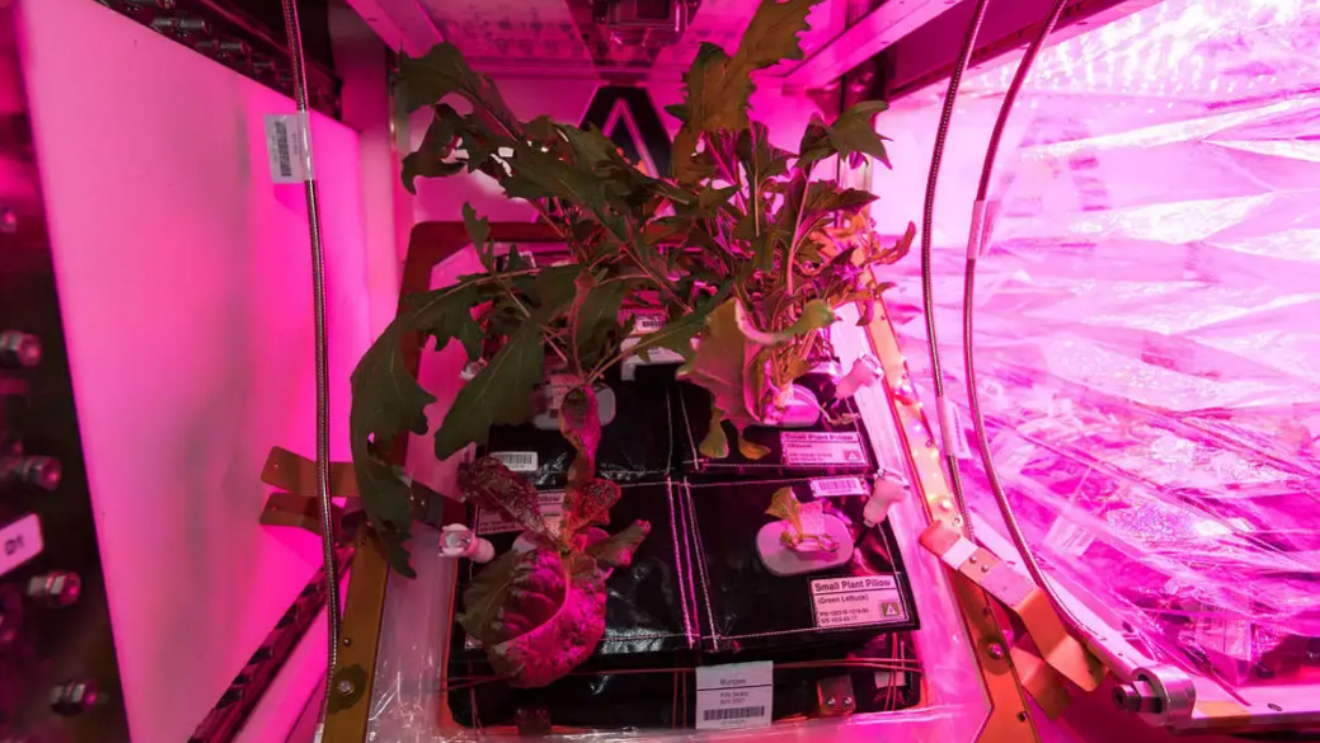
Plants are nature’s multitaskers, providing oxygen, purifying water, recycling waste, providing pharmaceuticals and biomaterials on demand, and even boosting astronauts’ mental health.
As we set our sights on long-duration missions to the Moon by 2030 and to Mars in 2040, ensuring proper nutrition for astronauts is a critical ‘red risk’ (NASA-speak for something considered the highest priority for crew health and mission success) that must be addressed before we even think about settling on extraterrestrial bodies.
But growing plants in space is hard.
Microgravity and a lower gravitational pull than on Earth throw a slow but complex wrench into fluid dynamics, hindering the flow of water and nutrients to plant roots.
On top of this, the lack of natural convection affects heat transfer and air circulation, potentially stunting plant growth.
Our ongoing research has discovered some fascinating insights into how plants adapt to space.
Scientists are working on decoding the mysteries of gravitropism in extra-terrestrial environments – that’s how plants respond to gravity different from Earth – to optimise crop cultivation in micro- and partial-gravity environments.
There’ll be a historic moment in late 2027 when plants will grow on the Moon for the first time.
NASA’s Artemis III mission will conduct the Lunar Effect on Agricultural Flora (LEAF) experiment, growing three fast-growing plant species in a controlled climate chamber on the lunar surface.
After a week, 500 grams of plant samples will return to Earth for analysis, with some studies conducted right here in Australia by P4S university partners on gene expression and the effects of lower gravity and higher cosmic radiation as stressors.
And the future of space farming is looking increasingly high-tech.
Researchers are harnessing the power of omics technologies and artificial intelligence to create ‘digital twins’ that optimise plant growth, food quality and acceptability by astronauts.
These advanced models account for the complex interplay between plant physiology and human sensory feedback, aiming to keep astronauts’ sensory perception engaged and menu fatigue at bay.
The DAFW group and P4S at the University of Melbourne is conducting this critical research into keeping astronauts happy and healthy in space.
But this work isn’t just about conquering space – it’s about improving life on Earth, too.
The insights we gain from growing plants in extreme environments could help revolutionise sustainable agriculture practices on our home planet.
As we stand on the brink of becoming a multi-planetary species, plants are proving to be our steadfast companions.
By harnessing their power, we’re not just reaching for the stars – we’re cultivating a sustainable future for humanity – on Earth and across the cosmos.